


The French press is one of the most popular ways to brew coffee for a reason. Its simplicity and ability to extract full flavor from coffee beans make it a favorite among beginners and coffee enthusiasts alike. Many people searching “how do you use a French press” are looking for clear, practical guidance, from measuring coffee to pressing correctly. This guide will walk you through everything, step by step, while offering tips to get the perfect cup every time.
How Do You Use a French Press
Using a French press is straightforward once you understand the process. Unlike drip coffee makers or espresso machines, it gives you full control over steeping time, water temperature, and coffee strength. Whether you’re a beginner or someone looking to refine your brewing technique, learning the correct method ensures your coffee is smooth, rich, and flavorful.
Understanding the French Press
A French press, also called a press pot or plunger pot, is a manual coffee brewing device that uses immersion and a metal mesh filter to extract coffee. It’s made up of:
- The beaker or carafe – where coffee grounds and water are combined.
- The plunger with a mesh filter – presses the grounds to the bottom while allowing brewed coffee to flow.
- The lid – keeps the coffee warm during brewing.
This method allows oils and fine particles to remain in the coffee, producing a fuller-bodied cup compared to drip coffee. If you’re asking “how does a French press work,” it’s basically a simple combination of coffee, hot water, and a few minutes of patience.
What You’ll Need
Before you start, gather everything you need for the perfect French press coffee:
- Freshly ground coffee beans (French press coffee beans) – coarse grind is essential
- Hot water at 195–205°F (water temperature for French press)
- Your French press
- A stirring utensil
- Timer or watch
- Optional: scale for precise coffee-to-water ratio (coffee to water ratio)
Using fresh coffee beans and the right grind size is critical for flavor. A too-fine grind can make coffee bitter and clog the plunger, while too coarse a grind can produce weak coffee.
Step-by-Step French Press Guide
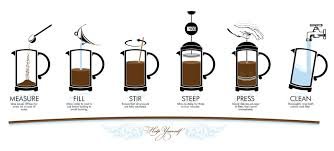
Here’s how to brew coffee in a French press correctly:
Step 1: Measure Your Coffee
The ideal ratio is roughly 1 tablespoon of coffee per 4 ounces of water, but you can adjust to taste (French press water to coffee ratio). Beginners often ask, “how many scoops of coffee do you use in a French press?”, starting with this ratio is a good rule of thumb.
Step 2: Heat the Water
Boil fresh water and let it cool slightly before pouring over the coffee grounds. Water that’s too hot can scald the coffee, producing a bitter taste, while water that’s too cool can under-extract.
Step 3: Add Coffee and Water
Place your coffee grounds into the French press and pour water evenly over them. Start pouring slowly in a circular motion to saturate all grounds evenly (plunger technique).
Step 4: Stir and Steep
Stir gently to ensure all coffee is fully immersed, then place the lid on with the plunger pulled up. Let it steep for 3–4 minutes depending on your taste preference (French press brewing time). Avoid oversteeping, which can make coffee bitter.
Step 5: Press and Pour
Slowly press the plunger down, applying even pressure. Pour your coffee immediately to prevent over-extraction. This step is where technique matters most to avoid grounds escaping into the cup.
Tips for Beginners
If you’re new to using a French press (using a French press for beginners), here are some practical tips:
- Preheat your French press with hot water before brewing to maintain temperature.
- Use freshly ground coffee for best flavor.
- Don’t press too quickly — a slow press ensures smooth coffee (how to use a French press without bitter coffee).
- Experiment with steeping time and coffee-to-water ratio to find your preferred strength.
Common Mistakes to Avoid
Many people searching “French press coffee tips for beginners” encounter common pitfalls:
- Using fine coffee grounds – leads to bitter coffee and clogs the plunger
- Oversteeping or understeeping – timing is key
- Pouring too quickly – can result in grounds in your cup
- Neglecting cleaning – old coffee oils affect flavor (French press coffee maintenance, cleaning a French press)
By avoiding these mistakes, you’ll get consistently smooth coffee that’s rich in flavor.
Comparing the French Press to Other Methods
Coffee enthusiasts often want to know how a French press compares to other brewing methods:
- French press vs drip coffee – more body and oils remain in the cup, richer flavor
- French press vs pour-over – immersion vs gravity brewing; French press is more full-bodied
- French press vs espresso – espresso is stronger, more concentrated, requires a machine
- French press vs AeroPress – AeroPress is faster, produces a cleaner cup, but less body
Understanding these differences helps you choose the best method for your taste.
Advanced Techniques and Flavor Tips
Once you’re comfortable with the basic French press method, there are a few ways to enhance your coffee experience (French press coffee tips for best flavor):
- Cold Brew with a French Press – Use coarsely ground coffee, add cold water, and steep for 12–24 hours. Strain with the plunger and enjoy a smooth, less acidic coffee (how to cook with a French press).
- Experiment with Coffee Origins – Different beans produce unique flavors. Try single-origin beans or blends to find your favorite profile.
- Spices and Flavoring – Add a pinch of cinnamon, cardamom, or nutmeg to the grounds before brewing for a subtle aromatic twist.
- Milk or Cream Additions – Heat milk or cream separately and add after pressing for a creamy texture without diluting the coffee flavor.
Troubleshooting Weak or Bitter Coffee
Even with careful technique, French press coffee can sometimes turn out weak or bitter. Here’s how to fix common issues:
- Coffee too weak – Increase the coffee-to-water ratio slightly, check grind size (coarse coffee grind), and ensure you’re steeping for the full 3–4 minutes.
- Coffee too bitter – Reduce steeping time or lower water temperature slightly. Avoid using fine grounds that over-extract.
- Grounds in cup – Press slowly and evenly, and ensure your mesh filter is clean.
- Coffee not hot enough – Preheat your French press and cup to maintain brewing temperature.
By understanding these adjustments, you can achieve consistently smooth and flavorful coffee every time (perfect French press coffee).
Cleaning and Maintenance
Proper maintenance extends the life of your French press and ensures better coffee taste (French press coffee maintenance, cleaning a French press).
- Rinse immediately after use to remove coffee oils and grounds.
- Disassemble the plunger and mesh filter weekly for a thorough clean.
- Avoid harsh detergents; warm water and mild soap work best.
- Check for wear on the mesh filter and replace if necessary to avoid grounds in your cup.
Regular care ensures your coffee always tastes fresh and smooth.
FAQs About Using a French Press
Q1: How do you use a French press for beginners?
- Start with a coarse grind, use 1 tablespoon of coffee per 4 ounces of water, steep for 3, 4 minutes, and press slowly. Preheating the French press improves extraction.
Q2: How many scoops of coffee do you use in a French press?
- Generally, use 1 tablespoon per 4 ounces of water, adjusting for taste. A standard 34-ounce French press would need about 8–9 tablespoons.
Q3: How to cook with a French press?
- Besides coffee, French presses can be used for cold brew, herbal teas, or even poaching small ingredients like eggs. The plunger helps separate solids from liquids efficiently.
Q4: What are common French press mistakes to avoid?
- Using fine grounds, oversteeping or understeeping, pressing too fast, and neglecting cleaning. Avoid these to maintain smooth, full-bodied coffee.
Tips for Consistently Great French Press Coffee
- Use freshly ground coffee beans and avoid pre-ground coffee that’s been sitting for weeks.
- Stick to the recommended water temperature to prevent bitterness.
- Experiment with coffee-to-water ratio until you find your perfect strength.
- Take your time pressing the plunger to avoid disturbing the grounds.
- Preheat your French press and cup to maintain optimal brewing temperature.
By following these steps and tips, your French press coffee will taste rich, aromatic, and satisfying every time.
