


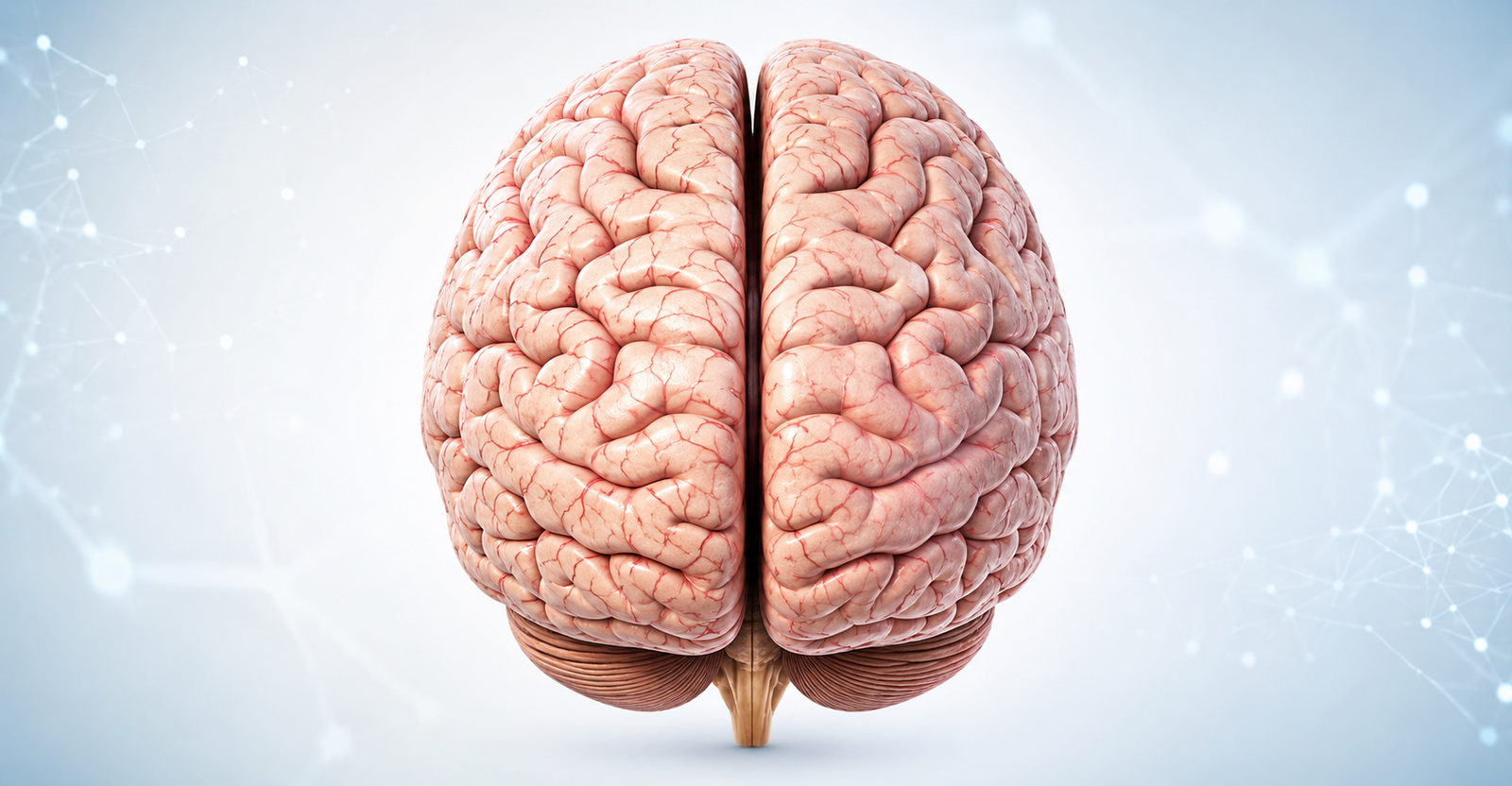
The longitudinal fissure of the brain is one of the clearest landmarks in brain anatomy. It is the deep midline groove that separates the left cerebral hemisphere from the right cerebral hemisphere. This structure is also called the longitudinal cerebral fissure, median longitudinal fissure, or interhemispheric fissure. All of these names describe the same important space between the two halves of the cerebrum.
At first, it may sound like the fissure is a small detail, but it plays a big role in how the brain is shaped, studied, and understood. It gives the brain its two-sided structure while still allowing deeper parts, especially the corpus callosum, to keep both hemispheres connected.
What Is the Longitudinal Fissure of the Brain?
The longitudinal fissure of the brain is a deep groove that runs along the middle of the cerebrum. When the brain is viewed from above, this fissure appears like a central line dividing the brain into two large sections.
These two sections are known as the cerebral hemispheres. The left hemisphere and right hemisphere are not completely separate organs; they are two connected sides of the same brain. The longitudinal fissure creates the visible division between them, while deeper nerve pathways allow them to communicate.
The word “longitudinal” means lengthwise, and “fissure” means a deep groove or split. So, the name simply describes a deep lengthwise groove in the brain.
Longitudinal Cerebral Fissure Function
The main longitudinal cerebral fissure function is structural. It separates the cerebrum into left and right hemispheres. This division helps organize the brain into two sides, each with its own specialized roles.
The fissure itself does not directly control movement, memory, speech, or emotions. Those jobs are handled by brain tissue, nerve cells, and networks inside the cerebral cortex and deeper brain structures. The fissure’s role is more like an anatomical boundary. It helps shape the brain and creates a clear separation between the two hemispheres.
This separation is important because the brain is arranged in a bilateral way. The left and right sides often handle different aspects of thinking, movement, sensation, and perception, although they constantly work together.
Function of the Longitudinal Fissure in Simple Words
The function of the longitudinal fissure can be understood in three simple ways.
First, it divides the cerebrum into two hemispheres. This is its most basic and important role.
Second, it provides space for protective tissue. A fold of dura mater called the falx cerebri sits inside the longitudinal fissure. The dura mater is the tough outer layer of the meninges, which are protective coverings around the brain. StatPearls describes the falx cerebri as a vertical, sickle-shaped fold of dura mater located within the longitudinal fissure between the cerebral hemispheres.
Third, it acts as a useful landmark in anatomy, imaging, and medical study. Because it lies along the midline, it helps doctors, radiologists, and students identify the center of the brain on diagrams, MRI scans, and CT scans.
Where Is the Longitudinal Fissure Located?
The longitudinal fissure is located along the midline of the cerebrum. It runs from the front part of the brain toward the back, separating the two cerebral hemispheres along the top and inner surfaces.
It lies above the corpus callosum, the large band of white matter that connects the left and right hemispheres. Kenhub describes the longitudinal, or interhemispheric, fissure as being located superior to the corpus callosum and containing the falx cerebri and anterior cerebral vessels.
This location makes the fissure one of the easiest brain landmarks to recognize. In diagrams, it is often shown as the deep central groove between the two rounded halves of the cerebrum.
Longitudinal Fissure and the Cerebral Hemispheres
The cerebral hemispheres are the two large halves of the cerebrum. The longitudinal fissure of the brain separates them, but it does not completely isolate them.
The left hemisphere is often linked with language, logical processing, and detailed sequencing. The right hemisphere is often associated with spatial awareness, visual understanding, and broader pattern recognition. These are general patterns, not strict rules for every person.
The brain works best when both hemispheres communicate. That communication happens mainly through the corpus callosum, which contains white matter fibers connecting the two sides. NCBI’s StatPearls describes the corpus callosum as the main commissural region of the brain that connects the left and right cerebral hemispheres.
So, the longitudinal fissure separates the hemispheres on the surface, while the corpus callosum connects them deeper inside.
The Role of the Corpus Callosum
The corpus callosum is closely related to the longitudinal fissure because it sits deep beneath it. While the fissure creates the division between the hemispheres, the corpus callosum acts like a bridge.
This bridge allows information to pass from one side of the brain to the other. For example, movement, vision, touch, language, and memory often require both hemispheres to share information. Without this connection, the two sides would not coordinate as smoothly.
This is why the longitudinal fissure should not be seen as a complete wall. It is a deep anatomical groove, but the brain is still highly connected.
Falx Cerebri: The Protective Fold Inside the Fissure
One of the most important structures inside the longitudinal fissure is the falx cerebri. This is a strong, curved fold of dura mater that descends between the two cerebral hemispheres.
The falx cerebri helps support and stabilize the brain inside the skull. It also separates the hemispheres physically while still allowing deeper connections, such as the corpus callosum, to remain intact.
Because of this relationship, the terms longitudinal fissure, interhemispheric fissure, and falx cerebri often appear together in anatomy books and medical imaging discussions.
Is the Longitudinal Fissure the Same as the Interhemispheric Fissure?
Yes. In most anatomy contexts, the longitudinal fissure and interhemispheric fissure refer to the same structure.
The term “interhemispheric fissure” simply means the fissure between the hemispheres. The term “longitudinal fissure” describes the lengthwise direction of the groove. IMAIOS lists the longitudinal cerebral fissure as a deep groove separating the two cerebral hemispheres and notes that it is also known as the median longitudinal fissure, cerebral fissure, or interhemispheric fissure.
So, if a student, doctor, textbook, or scan report uses either name, they are usually talking about the same midline groove in the brain.
Longitudinal Fissure vs Other Brain Grooves
The brain has many grooves and folds. These folds help increase the surface area of the cerebral cortex, allowing more brain tissue to fit inside the skull.
A smaller groove is usually called a sulcus, while a deeper groove is often called a fissure. The longitudinal fissure is one of the most important fissures because it separates the two entire cerebral hemispheres.
It is different from the central sulcus, which separates the frontal lobe from the parietal lobe. It is also different from the lateral fissure, also known as the Sylvian fissure, which separates parts of the frontal and parietal lobes from the temporal lobe.
The longitudinal fissure is more central and more visible because it marks the boundary between the left and right halves of the cerebrum.
Why the Longitudinal Fissure Is Important in Brain Anatomy
The longitudinal fissure of the brain is important because it helps explain the basic layout of the cerebrum. Without understanding this fissure, it is harder to understand how the brain is divided into hemispheres.
It is also important for learning related structures, including:
Cerebral hemispheres
Corpus callosum
Falx cerebri
Cerebral cortex
Gyri and sulci
Interhemispheric fissure
Median longitudinal fissure
Brain midline anatomy
Anterior cerebral vessels
These terms often appear together because they are all part of the same anatomical region.
Longitudinal Fissure in MRI and CT Scans
In medical imaging, the longitudinal fissure is a useful landmark. On MRI scans and CT scans, it helps show the midline of the brain. Doctors can use this midline view to compare both hemispheres and look for changes in brain structure.
For example, if swelling, bleeding, or a mass pushes brain structures away from the midline, doctors may describe a midline shift. The longitudinal fissure helps provide a reference point for noticing that kind of change.
The presence of the fissure itself is normal. It is not a sign of disease or injury. It is a natural part of healthy brain anatomy.
Does the Longitudinal Fissure Have a Direct Brain Function?
This is where many people get confused. The function of the longitudinal fissure is not the same as the function of brain tissue.
The fissure does not send nerve signals, store memories, or control muscles. Instead, it organizes the brain’s shape by separating the two cerebral hemispheres. The active work of thinking, sensing, moving, and remembering happens in the surrounding brain tissue and networks.
A simple way to understand it is this:
The longitudinal fissure separates.
The corpus callosum connects.
The cerebral cortex processes information.
The falx cerebri supports and protects the midline area.
Together, these structures help the brain stay organized and functional.
Easy Way to Remember It
A useful memory trick is to think of the longitudinal fissure as the brain’s natural center line.
It runs lengthwise through the cerebrum and divides it into left and right halves. But the two halves are not cut off from each other. The corpus callosum works underneath as a communication bridge.
So, when someone asks about longitudinal cerebral fissure function, the simplest answer is:
The longitudinal cerebral fissure separates the left and right cerebral hemispheres and helps define the brain’s midline structure.
And when someone asks about the function of the longitudinal fissure, the answer is:
Its main function is to divide and organize the cerebrum, while nearby structures like the corpus callosum and falx cerebri support communication and protection.
Key Details to Know
The longitudinal fissure of the brain is a normal anatomical structure, not a crack or injury. It is the deep groove that separates the left and right cerebral hemispheres. It is also called the longitudinal cerebral fissure, median longitudinal fissure, or interhemispheric fissure.
Its function is mainly structural. It helps divide the cerebrum into two hemispheres, provides space for the falx cerebri, and serves as an important landmark in brain anatomy and imaging. The hemispheres remain connected by the corpus callosum, which allows both sides of the brain to communicate and work together.
