


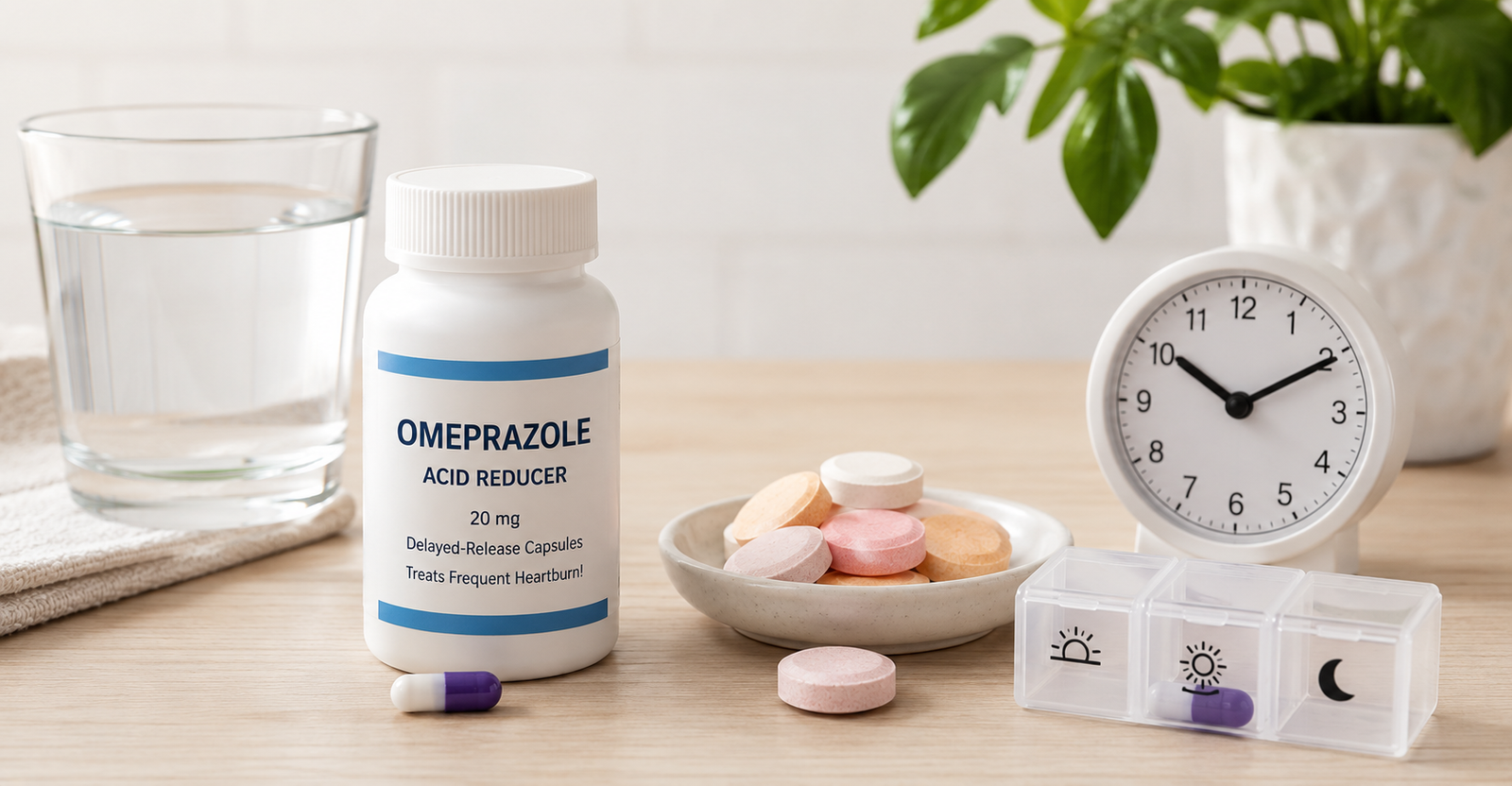
If you are dealing with heartburn and wondering can I take Tums and omeprazole, the simple answer is: yes, many people can take Tums and omeprazole on the same day when used as directed. Tums is an antacid that works quickly for short-term relief, while omeprazole, sold under the brand name Prilosec, is a proton pump inhibitor that lowers stomach acid over time.
Mayo Clinic notes that antacids may be taken with omeprazole to help relieve symptoms while omeprazole is starting to work, unless your doctor tells you otherwise. Omeprazole can take several days to give full relief, so using an antacid for breakthrough symptoms is common.
Quick Answer: Can You Take Tums and Omeprazole Together?
Yes, you can take omeprazole and Tums together in many cases, but it is usually smarter to separate them by a little time if possible.
A simple routine looks like this:
Take omeprazole before a meal, often before breakfast.
Use Tums later as needed for quick heartburn relief.
Do not take more Tums than the label allows.
Do not use omeprazole longer than directed unless your doctor says to.
This also answers the common questions: can I take Tums and Prilosec, can you take Tums and Prilosec, can I take omeprazole with Tums, and can you take Tums with omeprazole. Prilosec is a brand name for omeprazole, so the same safety advice applies. The FDA explains that both prescription Prilosec and Prilosec OTC contain omeprazole, but OTC Prilosec is meant for frequent heartburn, not immediate relief.
Why People Take Both
Tums and omeprazole do different jobs.
Tums contains calcium carbonate, which works as an antacid. It helps neutralize acid that is already in the stomach. The official Tums label says it relieves heartburn, acid indigestion, sour stomach, and upset stomach linked with these symptoms.
Omeprazole reduces how much acid the stomach makes. It does not work like a quick chewable antacid. The FDA says Prilosec OTC may take 1 to 4 days for full effect, although some people feel better sooner.
That is why someone may take omeprazole in the morning but still reach for Tums later if heartburn breaks through.
Best Timing for Tums and Omeprazole
The easiest timing is:
Omeprazole: take before breakfast or before your main meal, depending on your doctor’s instructions or the product label.
Tums: take only when symptoms happen, usually after eating or when heartburn flares.
Mayo Clinic says omeprazole capsules or delayed-release capsules are usually taken before a meal, preferably in the morning, and that antacids can be used with omeprazole unless a doctor advises otherwise.
If you accidentally took Tums and omeprazole at the same time once, do not panic. For most people, that is unlikely to be an emergency. But for best routine use, taking omeprazole first and saving Tums for later symptoms is a cleaner approach.
Can You Take Tums on Omeprazole Every Day?
You should be careful if you feel like you need Tums every day while taking omeprazole. Occasional breakthrough heartburn can happen, especially early in treatment. But needing antacids again and again may mean the heartburn is not well controlled, the timing is off, the diagnosis is different, or another issue needs attention.
The FDA says Prilosec OTC is taken once daily for 14 days, should not be taken for more than 14 days, and should not be repeated more often than every 4 months unless directed by a doctor. It also says Prilosec OTC is not for occasional heartburn or for people who want immediate relief.
Tums also has limits. The official label says adults and children 12 and older may chew 2 to 4 tablets as symptoms occur, but should not exceed the listed daily limit, and should not use the maximum dosage for more than 2 weeks unless supervised by a doctor.
Tums vs Omeprazole: What Is the Difference?
| Medicine | Type | How It Works | Best For |
| Tums | Antacid | Neutralizes stomach acid already present | Fast, short-term heartburn relief |
| Omeprazole / Prilosec | Proton pump inhibitor | Reduces acid production | Frequent heartburn or acid-related conditions |
| Tums + Omeprazole | Combination approach | Long-term acid control plus quick relief | Breakthrough symptoms while omeprazole starts working |
So if you ask can you take Tums and omeprazole together, the answer is usually yes, but they are not doing the same thing. Tums is quick relief. Omeprazole is acid control over time.
Can I Take Tums With Omeprazole for Acid Reflux?
Many people with acid reflux, GERD symptoms, or frequent heartburn use omeprazole for acid control and Tums for occasional breakthrough burning. That can be reasonable, but the pattern matters.
If symptoms happen once in a while after a heavy meal, Tums alone may be enough. If symptoms happen two or more days a week, Prilosec OTC may be considered for frequent heartburn. The FDA defines frequent heartburn as heartburn that occurs 2 or more days a week and says Prilosec OTC is used for that purpose.
But if you have severe pain, trouble swallowing, vomiting blood, black stools, unexplained weight loss, or symptoms that keep returning, do not keep treating it yourself.
When Tums May Not Be the Best Choice
Tums is common, but it is still a medicine. Because it contains calcium carbonate, it may not be right for everyone in large amounts.
Be careful with frequent Tums use if you have:
Kidney disease
High calcium levels
A history of kidney stones
A low-salt or restricted mineral diet
Pregnancy, unless following label limits and medical advice
Other prescription medicines that may interact with antacids
The Tums label specifically says to ask a doctor or pharmacist before use if you are presently taking a prescription drug because antacids may interact with certain prescription medicines.
Omeprazole Side Effects to Know
Omeprazole is widely used, but it can still cause side effects. The FDA lists possible Prilosec OTC side effects such as headache, diarrhea, constipation, upset stomach, vomiting, stomach pain, cough, cold symptoms, dizziness, and rash.
Mayo Clinic also notes that longer-term omeprazole use can be linked with issues such as low magnesium, vitamin B12 absorption concerns, fracture risk in some people, serious diarrhea, kidney problems, and rare serious skin reactions. These risks are more relevant when PPIs are used for longer periods or at higher doses, especially without medical supervision.
Medicines That Need Extra Caution
Do not assume Tums and omeprazole are safe with every other medicine. Omeprazole can interact with certain prescriptions, and antacids can affect how some drugs are absorbed.
The FDA says it is especially important for healthcare providers to know if someone taking Prilosec OTC is also taking medicines such as warfarin, certain prescription antifungal or anti-yeast medicines, diazepam, or digoxin.
Mayo Clinic also lists several medicines where omeprazole may not be recommended or may require dose changes or monitoring, including rilpivirine, and notes that other health problems such as liver disease, low magnesium history, osteoporosis, seizures, or lupus may affect use.
What If Tums and Omeprazole Are Not Helping?
If you take omeprazole correctly and still need Tums often, it may be time to review your symptoms. Common reasons heartburn treatment does not work well include taking omeprazole at the wrong time, eating trigger foods, lying down too soon after meals, taking medicines that irritate the stomach, or having another condition that feels like reflux.
You should speak with a healthcare professional if:
Heartburn continues after a full OTC course
You need omeprazole for more than 14 days
You need another 14-day course sooner than every 4 months
You keep needing Tums daily
Symptoms are getting worse instead of better
The FDA advises stopping Prilosec OTC and telling a doctor if heartburn continues to worsen, if you need it for more than 14 days, or if you need more than one treatment course every 4 months.
Warning Signs That Need Medical Advice
Heartburn is common, but some symptoms should not be treated with repeated Tums or Prilosec without medical help.
Get medical advice quickly if you have:
Trouble swallowing
Pain when swallowing
Vomiting blood
Black or bloody stools
Chest pain or pressure
Unexplained weight loss
Persistent vomiting
Severe stomach pain
Symptoms that wake you often at night
Heartburn with shortness of breath, sweating, or arm/jaw pain
The FDA says Prilosec OTC should not be used by people with trouble or pain swallowing food, vomiting with blood, or bloody or black stools.
Simple Daily Use Example
A common schedule may look like this:
Take omeprazole in the morning before breakfast.
Eat normally, avoiding obvious trigger foods.
Use Tums only if heartburn breaks through.
Do not exceed the Tums label dose.
Do not extend Prilosec OTC beyond the label course unless your doctor tells you to.
This helps answer can you take Tums on omeprazole and can you take Tums with omeprazole in a practical way. Yes, but Tums should usually be the backup for symptoms, not something you need constantly.
Plain-English Answer
Can I take Tums and Prilosec? Usually yes, if you follow the label and do not have a medical reason to avoid either medicine.
Can I take Tums and omeprazole? Yes, many people can. Take omeprazole as directed, usually before a meal, and use Tums as needed for quick relief.
Can you take omeprazole and Tums together? Mayo Clinic says antacids may be taken with omeprazole unless your doctor says otherwise, but spacing them out is often a practical routine.
Can you take Tums and omeprazole together every day? Not without thinking about why. If you need Tums often while taking omeprazole, or symptoms keep coming back, speak with a doctor or pharmacist.
