


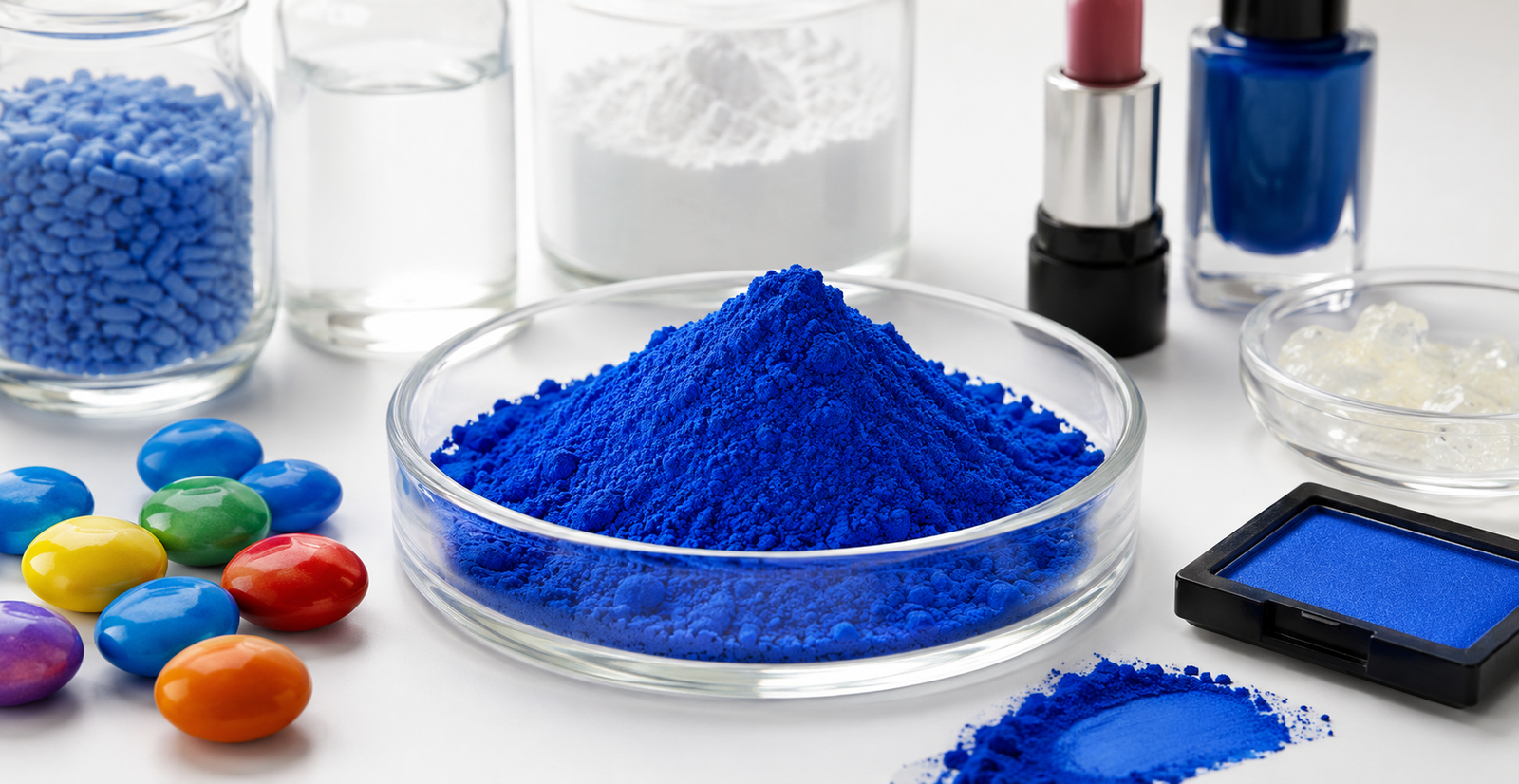
If you have seen Blue 1 Lake on a lipstick, candy, tablet, capsule, skincare product, or processed food label, you may wonder what it actually is. The simple answer is: Blue 1 Lake is a synthetic blue color additive made from FD&C Blue No. 1 in an insoluble lake form.
It is used to give products a stable blue shade, especially where a water-soluble dye would bleed, dissolve, or spread too much. The FDA lists FD&C Blue No. 1 as permanently listed, certification required, and allowed for use in foods, drugs, and cosmetics under its color additive status.
Quick Answer: What Is Blue 1 Lake?
Blue 1 Lake is a water-insoluble pigment made from Blue 1, also known as FD&C Blue No. 1, Brilliant Blue FCF, Acid Blue 9, or CI 42090.
In plain English:
Blue 1 = a water-soluble blue dye
Blue 1 Lake = a water-insoluble blue pigment version of that dye
The FDA describes lakes as insoluble pigments formed by chemically reacting water-soluble straight colors with precipitants and substrata.
That is why Blue 1 Lake is often used in products that need color to stay in place, such as tablets, coated candies, makeup, lipstick, eyeshadow, and other colored formulas.
Blue 1 vs Blue 1 Lake: What Is the Difference?
The difference comes down to solubility and product use.
Blue 1 dissolves in water. It is often used where color needs to mix into liquids or water-based products.
Blue 1 Lake does not dissolve in water the same way. It disperses as a pigment, which makes it useful in products where manufacturers want stronger color control and less bleeding.
A simple comparison:
| Ingredient | Main Form | Best Known For |
| Blue 1 | Water-soluble dye | Drinks, gels, water-based formulas |
| Blue 1 Lake | Water-insoluble pigment | Tablets, coatings, cosmetics, lip products |
The FDA’s food substance inventory lists FD&C Blue No. 1, Aluminum Lake with CAS number 68921-42-6 and identifies its technical effect as a color or coloring adjunct.
Why Is It Called “Lake”?
The word lake does not mean it comes from water or a lake. In color chemistry, a lake is a pigment made by attaching or precipitating a dye onto a base material, often an aluminum compound.
This makes the color less likely to dissolve and spread. In real products, that can help with:
Color stability
Even color distribution
Less bleeding
Better performance in oils, waxes, coatings, and powders
Brighter color in solid products
So when you see Blue 1 Lake on an ingredient list, it usually means the manufacturer wanted a blue color that behaves more like a pigment than a dye.
Where Is Blue 1 Lake Used?
Blue 1 Lake can appear in several product categories. It is commonly found in:
Cosmetics
Lipstick
Lip balm
Eyeshadow
Face makeup
Skincare products
Toothpaste or oral care products
Tablets and capsules
Candy coatings
Decorative food items
Processed foods
CosmeticsInfo explains that Blue 1 Lake is used in cosmetics and personal care products, including lipstick, while Blue 1 is used in a wider range of products such as makeup, eye makeup, personal cleansers, and skincare.
Is Blue 1 Lake a Natural Ingredient?
No. Blue 1 Lake is not natural. It is a synthetic colorant.
That does not automatically mean it is unsafe, but it does mean it is different from natural color sources such as beet juice, turmeric, spirulina, paprika extract, or fruit and vegetable concentrates.
On labels, Blue 1 Lake may appear as:
Blue 1 Lake
FD&C Blue No. 1 Aluminum Lake
Brilliant Blue FCF Aluminum Lake
CI 42090:2
Acid Blue 9 Aluminum Lake
Food Blue No. 1 Aluminum Lake
The FDA’s listing includes several other names for FD&C Blue No. 1, including Brilliant Blue FCF, C.I. 42090, Acid Blue 9, and Food Blue No. 1.
Is Blue 1 Lake Safe?
In the United States, Blue 1 and certain Blue 1 lake uses are regulated color additives. The FDA lists FD&C Blue No. 1 as approved for foods, drugs, and cosmetics, and it is subject to batch certification.
Batch certification matters because certified color additives must meet required identity and purity specifications before they can be used in FDA-regulated products. The FDA notes that color additives listed in 21 CFR Parts 74 and 82 must be analyzed and batch certified before use in FDA-regulated products sold in the U.S., including imported products.
For most people, occasional exposure through normal food, medicine, or cosmetic use is not usually a concern. However, some people may prefer to avoid synthetic dyes, and rare sensitivity or allergy-like reactions are possible with many color additives.
Does Blue 1 Lake Have Health Benefits?
No. Blue 1 Lake does not provide health benefits. It is used for color, not nutrition, hydration, skin repair, or wellness.
Some online articles may talk about “benefits” of blue colorants, but the practical benefit of Blue 1 Lake is mainly product appearance. It helps make a tablet, candy, lipstick, or cosmetic product look a certain color.
The FDA food substance inventory lists FD&C Blue No. 1 Aluminum Lake for the technical effect of color or coloring adjunct, not as a nutrient or active health ingredient.
Why Do Companies Use Blue 1 Lake Instead of Natural Blue Color?
Blue is one of the harder colors to create naturally in a stable, bright, affordable way. Many natural blue ingredients can shift color with pH, light, heat, or storage time.
Companies may choose Blue 1 Lake because it can offer:
Strong blue color
Good stability
Consistent shade from batch to batch
Better performance in dry or oily formulas
Less color bleeding
Lower cost than some natural color systems
This is why Blue 1 Lake is common in products where appearance needs to stay consistent on the shelf.
Blue 1 Lake in Cosmetics
In cosmetics, Blue 1 Lake is mainly a colorant. It may be used in lip products, powders, eye-area cosmetics, and other makeup formulas depending on the specific, and other makeup formulas depending on the specific regulatory permission and product type.
The FDA’s color additive listing for FD&C Blue No. 1 includes cosmetics use and states that restrictions include cosmetics generally and eye-ars, under the relevant listing. citeturn910141view0
This matters because not every color additive is allowed in every cosmetic area. Eye products, lip products, externally applied cosmetics, and injected uses are treated differently.
Blue 1 Lake in Food
In food, Blue 1 Lake may be used to create or adjust blue, green, purple, or mixed shades. It may appear in candy coatings, desserts, frostings, snacks, decorations, or processed foods.
The FDA lists FD&C Blue No. 1 for food use, and it identifies FD&C Blue No. 1 Aluminum Lake as loring effect. citeturn910141view0turn910141view1
If you are trying to avoid artificial colors, check the ingredient list for Blue 1, Blue 1 Lake, FD&C Blue No. 1, and similar names.
Blue 1 Lake in Medicines
Blue 1 Lake can also appear as an inactive ingredient in tablets or capsules. In this case, it helps identify or color the medication, but it does not treat the condition.
For example, a medicine may contain Blue 1 Lake so the tablet has a recognizable color. The active ingredient does the medical work; the color additive is there for appearance, identification, or coating design.
If you have a known sensitivity to dyes or color additives, ask a pharmacist whether a dye-free version of the medicine is available.
Is Blue 1 Lake the Same as Blue 1 Dye?
They are closely related, but not exactly the same.
Blue 1 dye is the soluble version.
Blue 1 Lake is the lake pigment version.
Both are based on FD&C Blue No. 1, but they behave differently in formulas. The lake form is often chosen when the product needs a pigment that stays in place better.
Can Blue 1 Lake Cause Allergies or Side Effects?
Most people do not notice any reaction from Blue 1 Lake in normal product amounts. Still, sensitivity can happen. Possible reactions may include skin irritation, rash, itching, or allergy-like symptoms in sensitive individuals.
If you notice symptoms after using a cosmetic, eating a colored food, or taking a medication with Blue 1 Lake, stop using the product and speak with a healthcare professional, especially if symptoms are severe or repeated.
Seek urgent medical help if you experience swelling of the lips, tongue, or throat, wheezing, trouble breathing, severe hives, or dizziness after exposure to any product.
Should You Avoid Blue 1 Lake?
You do not automatically need to avoid Blue 1 Lake if you tolerate it and are comfortable using FDA-regulated synthetic color additives.
You may choose to avoid it if:
You prefer dye-free products
You have a known sensitivity to synthetic colors
You react to certain cosmetics or medicines
You are buying for a child with color additive concerns
You want more natural ingredient lists
You are following a specific clean-label lifestyle
Avoiding Blue 1 Lake is mostly a personal choice unless you have a confirmed reaction or your doctor advises you to avoid certain dyes.
What to Look for on Labels
Blue 1 Lake may not always appear under the same name. Look for:
Blue 1 Lake
FD&C Blue No. 1 Lake
FD&C Blue No. 1 Aluminum Lake
Brilliant Blue FCF Aluminum Lake
CI 42090
CI 42090:2
Acid Blue 9 Aluminum Lake
If the product is a cosmetic, ingredient names may follow cosmetic labeling style. If it is food or medicine, the label may use FD&C naming.
Blue 1 Lake and Tattoos or Permanent Makeup
Do not assume that a color additive allowed in cosmetics is automatically approved for injection into the skin. The FDA notes that color additives permitted for general use may not be used in the eye area, injections, or surgical sutures unless that specific use is listed, and currently no color additives are listed for ins tattoos or permanent makeup. citeturn910141view0
So Blue 1 Lake in a lipstick or eyeshadow label is a different issue from pigments injected into skin.
Simple Ingredient Meaning
If you are asking what is Blue 1 Lake, the clearest answer is:
Blue 1 Lake is a synthetic, water-insoluble blue pigment made from FD&C Blue No. 1. It is used to add color to foods, cosmetics, tablets, capsules, and personal care products.
It is not a vitamin, active medicine, or skincare treatment. Its purpose is color. In the U.S., FD&C Blue No. 1 is a certified color additive approved for regulated uses in foods, drugs, and cosmetics, while Blue 1 Lake is the lake pigment form used when compani
s want a more stable, less water-soluble blue color.
