


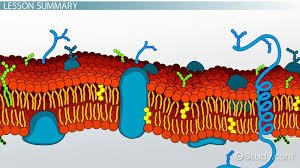
What Is a SimCell with a Water Permeable Membrane?
A SimCell with a water permeable membrane is a simplified, simulated model of a biological cell used to explore how water and solutes move across membranes. In biology, membranes regulate what enters and exits a cell, maintaining homeostasis. SimCells provide a controlled environment to study these dynamics without the complexity of living cells.
Unlike rigid models, a SimCell’s semi-permeable membrane allows water molecules to flow freely while restricting certain solutes. This mimics natural cell membrane permeability to water, enabling scientists and students to observe processes like osmosis through a simulated cell membrane.
SimCells are widely used in classrooms, laboratories, and research for SimCell osmosis simulations, demonstrating how water transport occurs under different conditions. By studying these models, we can understand both simple diffusion and more complex solute-water interactions.
How Water Moves Across a SimCell Membrane
Osmosis in SimCells
Water movement in a SimCell occurs primarily through osmosis, which is the flow of water from regions of low solute concentration to regions of high solute concentration. This process continues until an osmotic equilibrium in cells is reached.
In a SimCell model:
- Water molecules move to balance concentration differences between the intracellular and extracellular environments.
- Solutes such as hemoglobin or glucose cannot cross the membrane if it is selectively permeable, allowing only water movement.
- The net effect is a redistribution of water to maintain balance and stability within the simulated cell.
Key concepts:
- Movement of water across a membrane depends on solute concentrations inside and outside the SimCell.
- SimCell membrane permeability to solutes determines which molecules can accompany water flow.
- This process can be observed in SimCell osmosis simulations, where researchers track water shifts over time.
Factors Affecting Water Flow
Water movement is influenced by several conditions:
- Concentration gradients: The steeper the difference in solute concentration, the faster water moves.
- Membrane properties: Thickness, pore size, and selective permeability affect water transport.
- Temperature and pressure: Higher temperatures increase molecular movement, potentially speeding up diffusion.
- Presence of channels or aquaporins: These specialized pathways accelerate water movement across the membrane.
By manipulating these factors, students and researchers can understand how solvent movement across a cell membrane affects overall cellular behavior.
Membrane Properties in SimCell Models
Semi-Permeable vs Selectively Permeable Membranes
SimCells can feature semi-permeable membranes, allowing only certain molecules such as water to pass, or selectively permeable membranes, which may permit specific solutes.
- Semi-permeable membranes are ideal for studying osmosis alone.
- Selectively permeable membranes allow exploration of solute-solvent interactions and cellular responses to different molecules.
Understanding these differences is crucial in studying SimCell membrane permeability to solutes and how cells naturally regulate water transport across SimCell membranes.
Membrane Dynamics
Water movement is not just about flow; it involves membrane dynamics in cellular simulations. Factors like molecular size, membrane thickness, and solute type affect how water diffuses. In a SimCell:
- Water diffusion can be measured and quantified.
- Concentration gradients create a net water flow.
- Simulated models help illustrate diffusion of water in a SimCell, reinforcing real biological processes.
Key terms naturally integrated:
- SimCell semi‑permeable membrane
- Simulated cell with selectively permeable membrane
- Semipermeable membrane properties
- Water permeable but solute impermeable membrane
Simulating Water Movement in Virtual Cells
Concentration Gradient Effects
In SimCell models, SimCell concentration gradient effects are central to understanding water movement. A typical simulation may involve:
- 480 water molecules and 20 hemoglobin molecules inside the SimCell.
- Placement into an extracellular fluid with a different solute concentration.
- Observation of water moving in or out to reach equilibrium.
This illustrates how extracellular and intracellular water flow responds to solute differences, reflecting real cellular behavior.
Observing Membrane Behavior
SimCell models also allow for detailed examination of membrane behavior under varying conditions:
- Water moves faster when gradients are steep.
- Solute accumulation or depletion can indirectly affect water movement.
- The effect of solute concentration on water movement is clearly observed in these simulations.
These experiments provide insights into virtual cell models with permeable membranes, showing how physical principles govern biological processes.
Physics and Biology Behind Water Permeation
Osmotic Pressure and Driving Forces
Water movement is driven by osmotic pressure in SimCell models, a force resulting from solute differences across the membrane. This pressure dictates:
- The rate at which water enters or leaves the cell.
- How long it takes to reach osmotic equilibrium.
- Interactions between solutes and water molecules that influence solvent vs solute dynamics in membranes.
Measuring Water Permeation
Scientists quantify water flow using:
- Water permeation rate: how quickly water molecules cross the membrane.
- Membrane permeability coefficients: numerical representation of membrane efficiency.
- Transport of water vs solute molecules: understanding selectivity and effectiveness.
These metrics are critical for studying role of aquaporins in permeability and refining simulations for research or education.
Real-World Applications of SimCells with Water Permeable Membranes
SimCells are not just educational, they have multiple applications:
- Teaching Tool: Visualizing osmosis through a simulated cell membrane helps students understand water balance and solute dynamics.
- Pharmaceutical Research: Drug delivery models often use SimCells to predict how molecules cross cell membranes.
- Biotechnology: Synthetic cells or vesicles are designed using principles learned from SimCell osmosis simulation.
- Laboratory Simulations: Experiments with SimCell membrane permeability to solutes help study disease mechanisms and cellular responses without live tissue.
These applications show how a simple model can replicate complex water transport phenomena and improve understanding of cellular function.
Common Questions About SimCell Water Permeable Membranes
- Which cell has a permeable membrane?
Virtually all biological cells have membranes that are permeable to water and some solutes, mimicked in SimCell models. - What does semi-permeable membrane mean?
A membrane that allows certain molecules like water to pass while restricting others, essential for simulating osmosis. - When is the SimCell membrane observed in a cell o-scope?
Typically, simulations are visualized under microscopes or software, observing water movement when concentration differs inside and outside a cell. - Is water permeable through the cell membrane?
Yes, water can freely pass through a semi-permeable or selectively permeable membrane, guided by concentration gradients.
Observing SimCell Behavior in Different Environments
SimCells can simulate various real-world scenarios:
- Water entering a cell in a hypotonic solution
- Water leaving a cell in a hypertonic solution
- Effects of solute buildup inside the SimCell
- Interaction of multiple solutes and their influence on water transport
By adjusting SimCell concentration gradient effects and membrane properties, researchers can predict water flow in biological cells under stress or experimental conditions.
Advanced Insights into Membrane and Solvent Dynamics
- Solvent vs solute dynamics: Understanding why water flows while solutes may be restricted.
- Water permeation rate: How quickly equilibrium is reached in different simulation setups.
- Membrane permeability coefficients: Used to compare SimCell membranes with real biological membranes.
- Role of aquaporins: Specialized channels that speed up water movement, replicated in simulation models for accuracy.
SimCell models offer a practical bridge between theoretical knowledge and observable cellular behavior, highlighting the interplay between physics and biology in water transport.
Exploring Water Flow in Different SimCell Conditions
Water movement in a SimCell with a water permeable membrane can vary widely depending on environmental conditions and solute concentrations. By simulating these differences, researchers can understand how real cells behave under stress or in changing environments.
Hypotonic, Hypertonic, and Isotonic Conditions
SimCells can model classic cellular scenarios:
- Hypotonic solutions: The extracellular fluid has a lower solute concentration than the SimCell interior. Water flows into the SimCell, increasing its volume. This demonstrates net water flow through a permeable membrane.
- Hypertonic solutions: The extracellular fluid has a higher solute concentration. Water moves out of the SimCell, causing shrinkage.
- Isotonic solutions: The solute concentrations are equal inside and outside the SimCell. Water continues to move, but there is no net change in cell volume, illustrating osmotic equilibrium in cells.
Understanding these conditions helps visualize water diffusion across membranes and how cells maintain homeostasis in fluctuating environments.
Simulating Solute Effects
Not all molecules behave the same way in simulations:
- Large solutes, like proteins or polysaccharides, cannot pass through a typical water permeable membrane.
- Small solutes, such as ions or glucose, may pass if the membrane is selectively permeable.
- These simulations illustrate transport of water vs solute molecules, allowing learners to see the real impact of membrane selectivity.
SimCell simulations also model extracellular and intracellular water flow dynamically, which helps explain phenomena like cell swelling, shrinking, and solute-dependent water transport.
Role of Membrane Permeability in Water Transport
The characteristics of a SimCell membrane directly affect water movement:
- Membrane thickness: Thicker membranes can slow diffusion rates.
- Permeability coefficients: These numbers quantify how easily water passes through the membrane. Higher coefficients indicate faster water flow.
- Selective channels or aquaporins: In biological cells, aquaporins facilitate rapid water movement. SimCell models can simulate these channels to study water permeation rate more accurately.
These factors make SimCell osmosis simulations an effective teaching and research tool, bridging the gap between physics and cellular biology.
Realistic Applications in Research and Education
SimCells with water permeable membranes are not just educational; they have meaningful applications in scientific research:
- Pharmacology and Drug Testing: SimCells can predict how drugs move across membranes, which is critical for dosage and efficacy.
- Synthetic Biology: Designing artificial cells often relies on understanding water transport through semi-permeable membranes.
- Environmental Biology: Modeling how cells react to osmotic stress in various habitats, like freshwater versus saltwater environments.
- Laboratory Training: Students can manipulate solute concentrations and observe SimCell membrane permeability to solutes in real-time, providing hands-on understanding of theoretical principles.
By combining visual simulations with controlled experiments, learners can grasp osmosis and water permeation concepts in ways that live cell experiments sometimes cannot.
Advanced Simulation Scenarios
To further explore water dynamics in SimCells, researchers can experiment with:
- Variable membrane permeability: Adjusting the rate at which water and selected solutes pass through the membrane.
- Concentration gradient manipulation: Observing how steep or shallow gradients affect water movement in cell simulations.
- Temperature effects: Increasing or decreasing temperature to see changes in diffusion speed.
- Multiple solute systems: Combining different solutes to simulate complex intracellular environments.
These simulations highlight simulation of membrane behavior and demonstrate how subtle changes in conditions can produce noticeable effects on water transport.
Factors Affecting Realistic Water Flow
Several factors influence how accurately a SimCell replicates real cellular behavior:
- Solvent vs solute dynamics in membranes: Understanding which molecules move and which remain trapped helps predict cellular responses.
- Concentration gradient strength: A steeper gradient accelerates water movement, whereas shallow gradients slow it.
- Membrane characteristics: Thickness, permeability, and the presence of channels all affect transport.
- Time: Water movement is continuous, and equilibrium may take varying lengths of time depending on conditions.
By adjusting these parameters, a SimCell can provide detailed insights into net water flow through a permeable membrane under different biological or experimental conditions.
Observing Water Movement in SimCells
Modern simulation platforms allow observation of:
- Water entering or leaving a SimCell based on solute concentrations.
- Dynamic equilibrium when inflow and outflow rates match.
- Effects of intracellular solutes on water movement and cell volume.
This makes SimCell osmosis simulation a versatile tool for both teaching and research. Learners can directly correlate how does water move through a SimCell membrane with real-life biological processes.
Practical Learning Outcomes
Using SimCells in education helps students:
- Visualize water movement across membranes.
- Understand osmotic pressure in SimCell models.
- Study the effects of selective permeability and solute concentration on water transport.
- Gain insight into membrane dynamics, diffusion, and equilibrium concepts.
Researchers also benefit by simulating complex cellular conditions, such as:
- High solute concentrations inside the cell leading to water influx.
- Environmental stress scenarios, like hypotonic or hypertonic surroundings.
- Modeling membrane permeability to solutes to predict drug delivery or synthetic cell performance.
